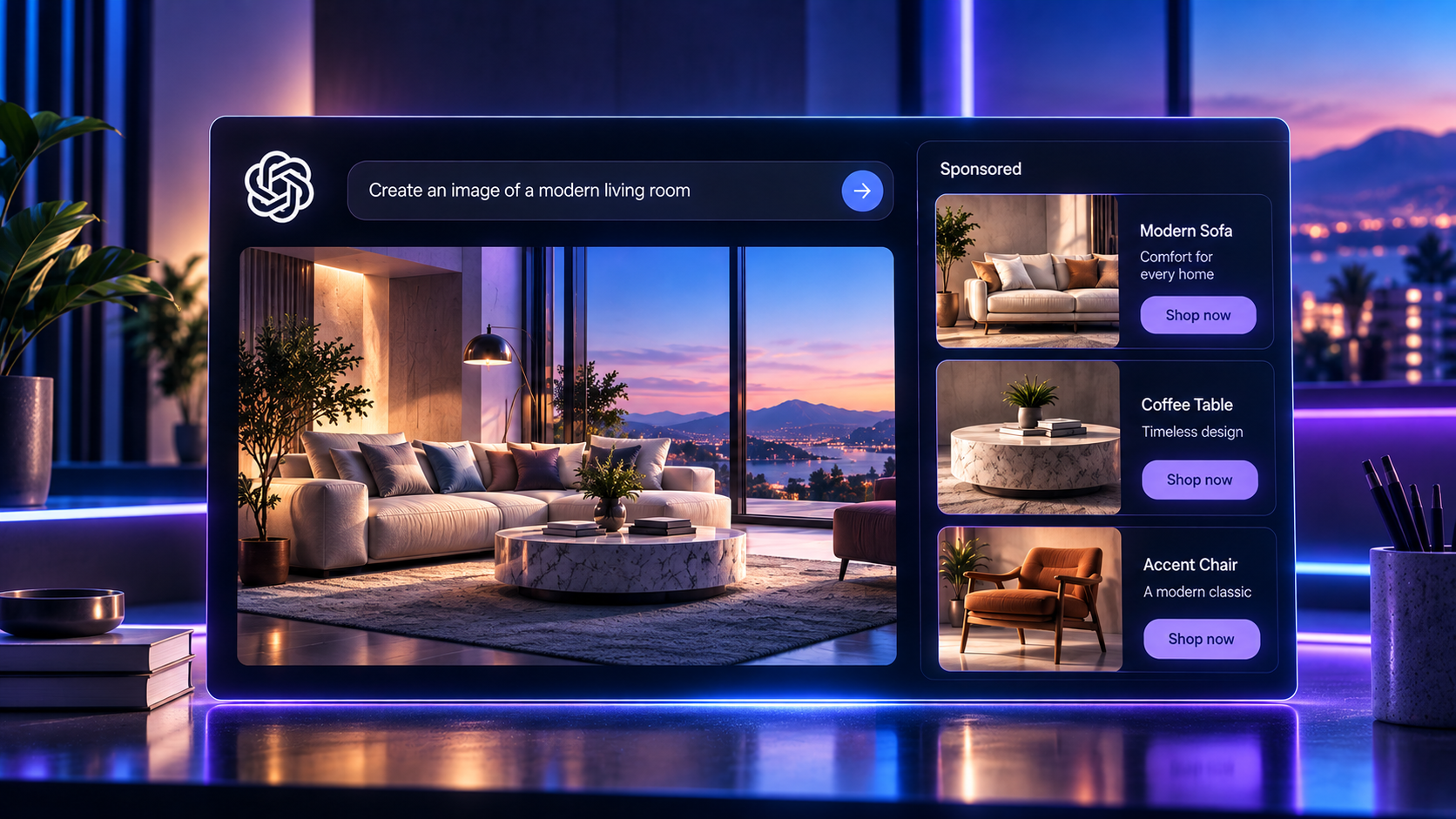
On 5 October 2026, OpenAI said it will test a new visual ad format during image generation in ChatGPT. The test starts later this month for Free and Go users in the US, with an initial group of advertisers. Ads are labeled and stay separate from the image being created. OpenAI also says advertising does not influence ChatGPT's answers. Businesses can sign up at ads.openai.com, but the format is not live for every account today.
For a store that already buys ads, this is a US test channel with a measurement stack. It is not a place to move the monthly budget yet.
OpenAI cites 1.2 billion weekly ChatGPT users. That is reach, not available impressions for a small brand. The new part is the image placement: someone generating a product shot, a room, or a logo on Free or Go may see a labeled product ad beside the image. Plus, Business, and Enterprise are outside this test as currently described.
The measurement stack is more interesting than the headline. Hightouch, Tealium, and LiveRamp are named for sending conversion data in. Attribution and click partners include AppsFlyer, Triple Whale, Adjust, DV Rockerbox, Northbeam, Branch, Singular, Kochava, Airbridge, and Tenjin. OpenAI is also running early geo-based incrementality work with Haus, Measured, and WorkMagic. Brand-suitability pilots with DoubleVerify and Integral Ad Science do not read private chats. Negative Phrases are available only to qualifying advertisers.
The performance claims are partner findings, and they measure different things. DV Rockerbox said WeightWatchers' attributed cost per acquisition on ChatGPT Ads was 15.3% lower than its blended paid-search benchmark. WorkMagic said wellness brand Dose saw statistically significant lift, with 67% of incremental purchases coming from new customers. Triple Whale said 93% of Portland Leather's visitors from ChatGPT Ads were new. None of those numbers is a platform-wide CPA or a forecast for another advertiser.
The distinction matters. Attributed CPA against a blended search benchmark is not an incrementality test. A high share of new visitors can also mean the pixel is seeing people your other channels already paid to reach.
Take a Shopify accessories brand that already runs Meta and Google and reports in Triple Whale. The useful move this week is a check, not a launch. Confirm that ChatGPT Ads can appear as a source in the reporting setup. If the image format opens to the account, cap the test at an amount you are comfortable losing and ask for a geo or holdout read rather than relying on last-click ROAS. If all you can see is assisted sessions, you cannot tell whether this is a new channel or just a new label on existing demand.
What is useful here is the labeled placement next to image generation and the fact that OpenAI is already wiring into measurement tools a mid-size brand may use. What is premature is treating the 15.3% or 93% partner figures as a result you should expect. This is a US test, later this month, for Free and Go users only. Apply if you can measure it properly. Do not rebuild the media plan around it.