What actually happened
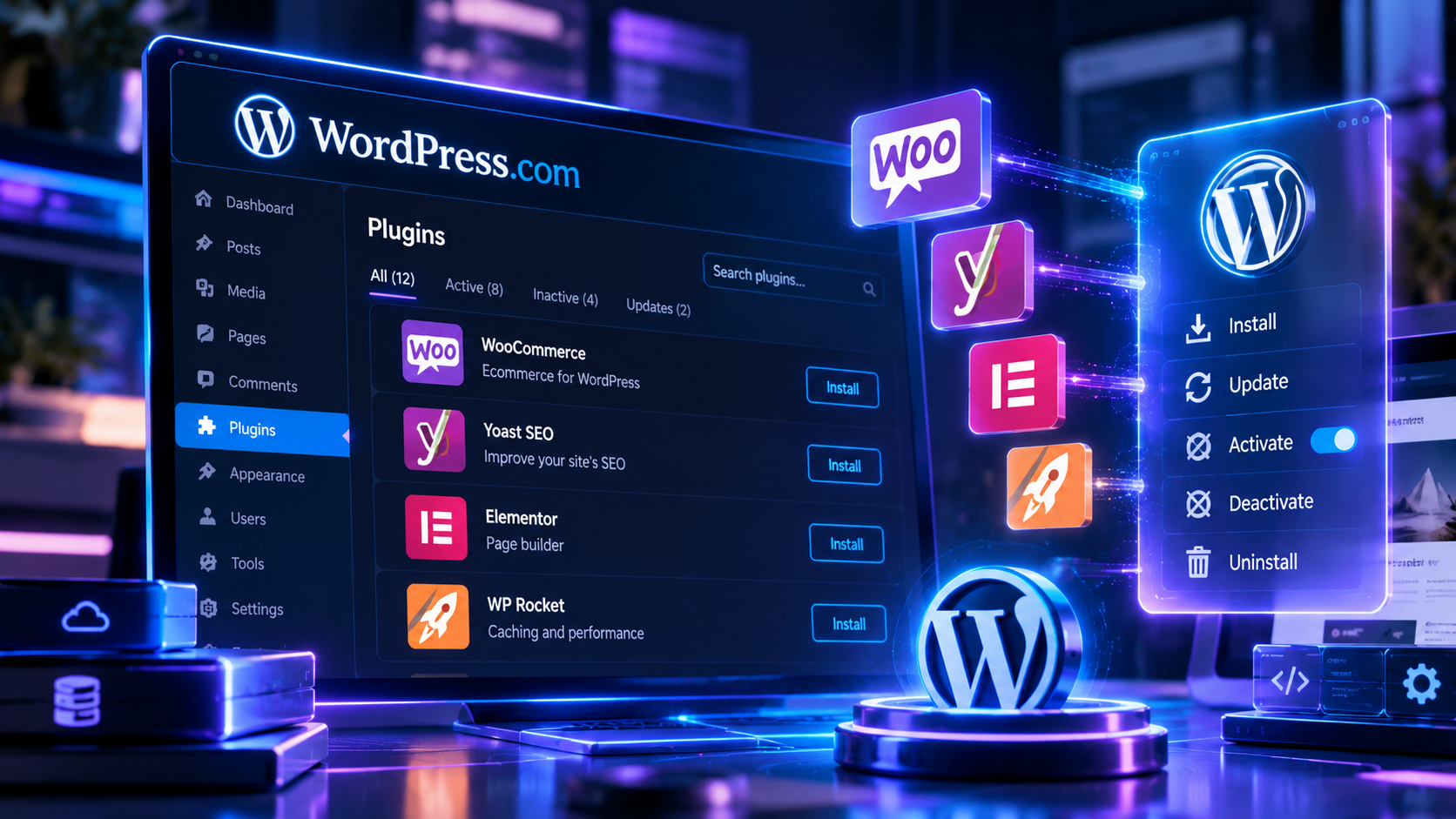
WordPress.com’s MCP tool reference was last reviewed on 2 October 2026. Under Plugins it now lists list, install (free or paid), upload from a ZIP, activate, deactivate, update, and uninstall. A direct upload is capped at 10 MB. A file already on the web can be up to 100 MB. The agent is supposed to confirm before an upload, a replace, or an uninstall.
The built-in WordPress Agent support page, reviewed 28 September, tells you to ask it to find, install, and manage plugins from chat, email, Telegram, or Slack. External agents reach the same account over MCP at https://public-api.wordpress.com/wpcom/v2/mcp/v1, with OAuth 2.1. Cursor has had a WordPress.com connector in its marketplace since July. That connector is not the new part. The plugin write tools are.
MCP is on paid WordPress.com plans. A free site gets it for 30 days after creation. Self-hosted sites need Jetpack AI or Jetpack Complete. The content tools also cover posts, pages, custom post types exposed to the REST API, and custom fields. WooCommerce prices, stock, and orders are called out as not editable this way. Page-builder layouts such as Elementor are out too.
Why a small team cares
Take a 12-site brochure agency. The old loop was: ask the model what to do, open wp-admin, find the plugin, change the setting, go back to the chat. The new loop is: the agent lists plugins, updates one, drafts the page, and you approve the write.
That only helps if the site is already on WordPress.com or a qualifying Jetpack plan. It does not replace a maintenance retainer on self-hosted stacks, and it does not investigate WooCommerce orders. A third-party “190 operations” MCP claim is circulating. It is not in Automattic’s tool list, so it is not part of this decision.
Hype vs useful
Useful: list plugins, update a known plugin, edit a page block, check the activity log, all with per-tool toggles and a confirm step on uninstall. Not useful yet: handing a general agent install rights across client production. A plugin can run arbitrary PHP. Install from chat is a staging experiment, not an agency default.