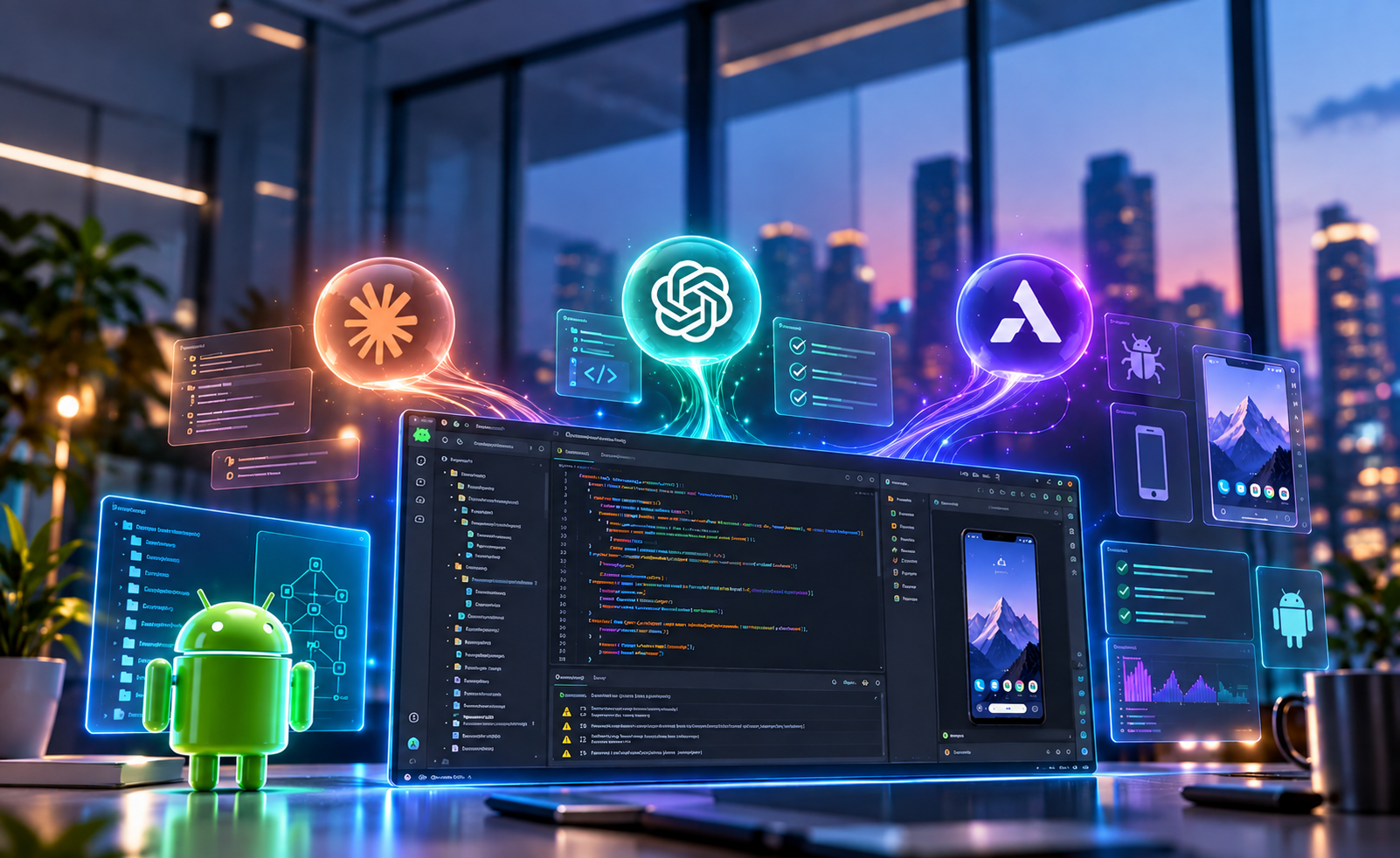
What actually happened
On 24 September 2026 Google put Bring Your Own Agent in Android Studio Rabbit 2 Canary. Claude Agent, OpenAI Codex and Google Antigravity plug in over the Agent Client Protocol. Other ACP agents sit in Settings > Tools > AI > Agents.
Studio already knows the project graph, Gradle setup, build errors, Compose previews and the emulator. ACP hands that context to the outside agent so you stop pasting stack traces into a second window.
The agent can edit files, run shell commands, run tests, search the web, drive SDK tools and control the emulator. Google also supports subagents, long-running sessions and project skills. Sign-in accepts personal or enterprise plans and API keys, subject to each provider. Studio’s built-in agent stays available.
This is a preview on the Canary channel. It is not a production team default.
Why a small team cares
A solo Android developer often pays for Claude or Codex already, then pays again for an IDE assistant that does not see Gradle. BYOA is the chance to spend the subscription you have inside the project you ship.
The useful test is a job that needs Android-specific eyes. Ask for the change, the existing tests and an emulator check. Compare that with the same agent in a naked terminal.
Switching agents when one quota dies is the second practical win. The repo stays in Studio. The worker is replaceable. That is the same direction as MCP for tools and AGENTS.md for repo instructions: keep the project portable, treat the model as hired help.
Hype vs useful
The hype is a fully delegated Android teammate. Canary previews move. Skills and emulator hooks will change.
Useful is one contained task on a real project, with a login you already have. If the agent still needs you to paste build output, the integration is not earning its keep yet.