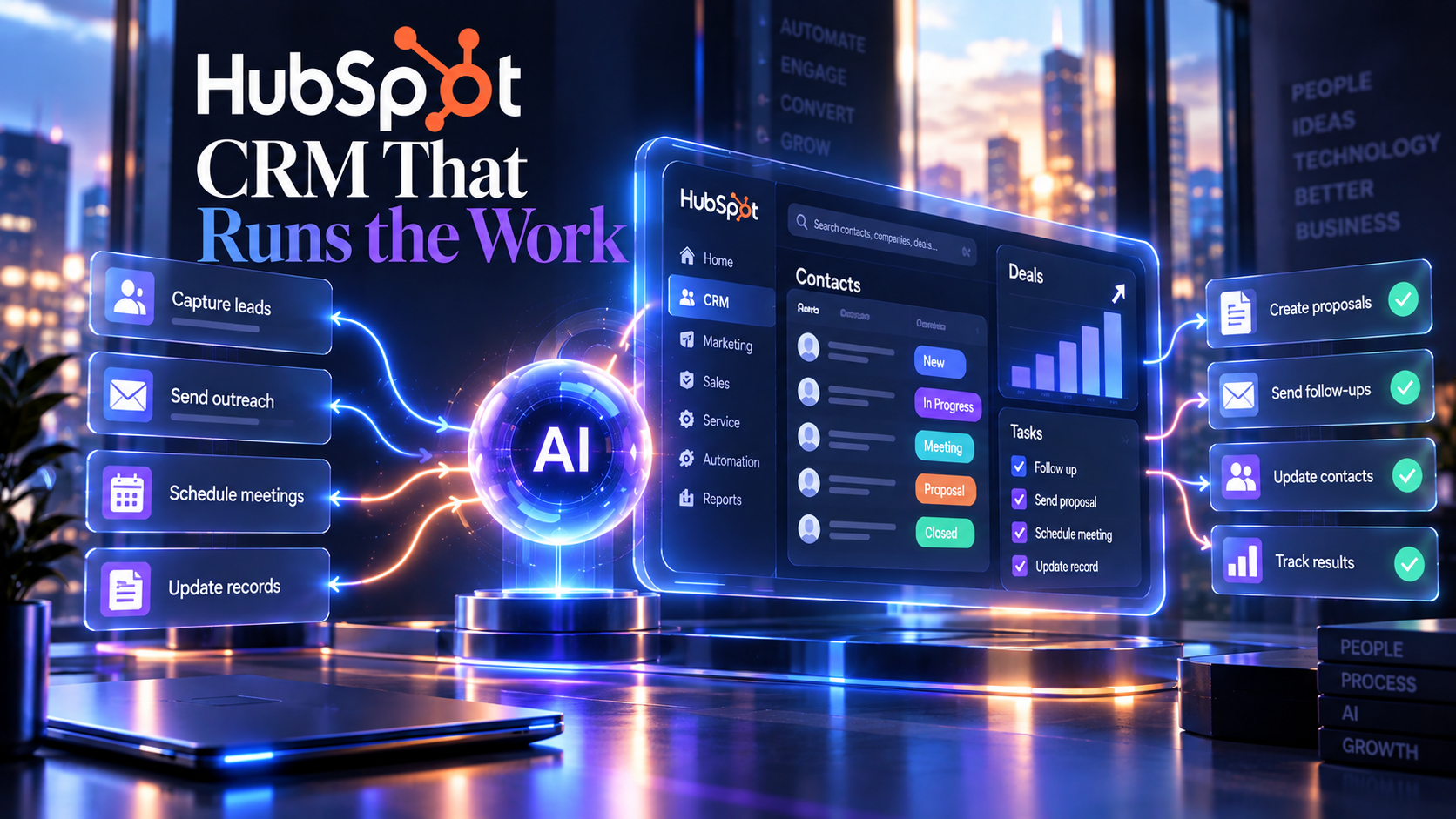
HubSpot used Unbound26 on September 16 to ship what it calls its biggest product change in years. The pitch is simple: stop picking which AI tool to use, describe the outcome, and let Breeze Assistant assign specialized agents against a CRM that updates itself.
That is the real shift. Breeze used to answer questions. It now takes a goal, picks agents, and produces campaign plans, reports, proposals, and outreach from CRM context. HubSpot wraps the data layer as Growth Context: company, team, and customer information in one place. Context Home scores how complete that picture is and flags the gaps that will make agents guess.
The weak point of every CRM agent has always been stale records. Smart CRM tries to close that by capturing and syncing calls, emails, and meetings instead of waiting for someone to type them in. Sales still reviews and approves auto-filled fields before they stick. That human check matters. In July, HubSpot had to reverse a terms change after customers pushed back on using one account’s data to improve another. Self-updating data only works if you trust what gets written.
Most small teams do not have a CRM admin. Records rot. Follow-up dies in the inbox. Marketing Studio is built for that mess: it surfaces weak AEO visibility, dead campaign segments, and leads with no follow-up, then Breeze can spin content and campaign agents to plan, write, and personalize nurture. HubSpot says early Marketing Studio users created 81% more campaigns and Breeze users generated 2.2x more leads. It also claims 3.6x more MQLs, 3.2x more won deals, and 2x more closed tickets for businesses using Growth Context. Those numbers are vendor-framed and not independently broken down. Treat them as direction, not a forecast.
Sales gets the same pattern. Prospecting Agent watches 40+ buying signals, builds buying groups, and drafts personalized outreach. Mobile Notetaker captures conversations. Deal Progression turns transcripts into suggested CRM updates, follow-ups, and deal plans, with approval. Revenue Hub can generate quotes from deal data already in the CRM. Workleap reportedly went from quote to signature in under 15 minutes. Useful if your process is already in HubSpot. Useless if quotes live in a spreadsheet and a PDF template.
Ads now sit in the same loop. HubSpot is the first CRM partner for ChatGPT Ads, so leads, attribution, and follow-up can land next to Meta and Google. Microsoft Advertising is coming in so Bing, Copilot, MSN, and Outlook performance can be compared inside HubSpot. That only pays off if you actually run paid and close the loop to pipeline.
What to do this week
Adopt if you already pay for HubSpot and your bottleneck is logging, follow-up, and campaign ops. Open Context Home first. If the score is junk, fix capture before you let agents write emails. Then pick one loop: unworked leads, quote-to-send, or a single underperforming segment. Keep approval on outbound and CRM writes.
Watch if you are on free CRM only. A lot of this will sit behind paid hubs and credits. Ignore if your pipeline lives in Gmail and a spreadsheet and you have no plan to move it. Agents cannot invent context you never stored.
The lock-in risk is real. Once agents run on HubSpot context, switching cost goes up. That is the product strategy. Use it if the time saved on logging and first-draft work is worth the rent.