Building a website with AI is quickly becoming the boring part.
The interesting question is what happens after you press publish.
Webflow just announced Source, a new platform designed for marketing teams and AI agents to build, launch and continuously optimize websites together. It connects the codebase, CMS and marketing stack into a shared environment where humans and agents can work on the same system.
That is a much bigger idea than another AI website builder.
Today, most business websites still follow roughly the same cycle: build something, launch it, occasionally check analytics, then ask a developer or agency to make changes.
Source is designed around a different model.
An agent can work directly with the underlying website, while marketers and designers retain visual control. Webflow describes agents working on campaigns, CRO tests, localization and optimization continuously rather than only during the initial build. Brand rules, permissions, approval flows and audit trails provide the guardrails around what those agents can actually do.
Webflow is also opening its existing platform to external AI agents. Its MCP server lets tools including Claude, Cursor and Codex design pages, manage content and interact with Webflow using natural language.
That matters more than it might sound.
A small business could eventually have an agent notice that a landing page is underperforming, prepare a new version, adapt the copy for another market and push the change through an approval workflow.
The website stops being a static marketing asset.
It becomes part of the business automation stack.
What SMBs should take away
This does not mean you should rebuild your website in Webflow tomorrow. Source is currently only in a limited research preview.
But the direction is important.
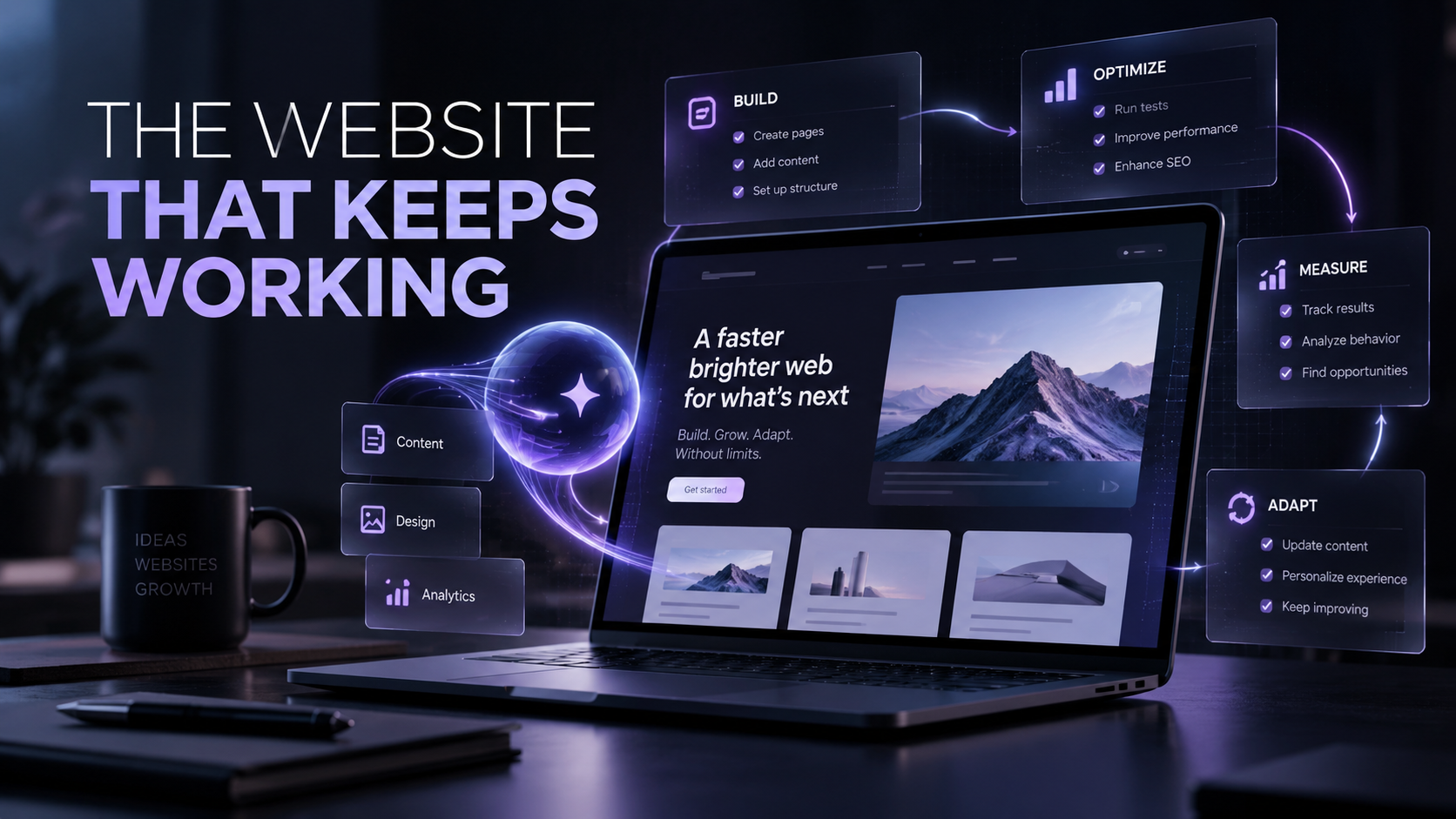
Websites are moving from build → publish → maintain toward build → measure → adapt → repeat.
And AI agents are increasingly able to operate inside that loop.
What to do now
Do not start by asking how you can put an AI agent on your website.
Ask something simpler:
What happens after someone visits it?
If enquiries still get manually copied into spreadsheets, leads wait for someone to follow up, landing pages never get tested and content becomes outdated, those workflows are the first things worth fixing.
The future website may optimize itself.
Most businesses still have plenty to automate before they need that.