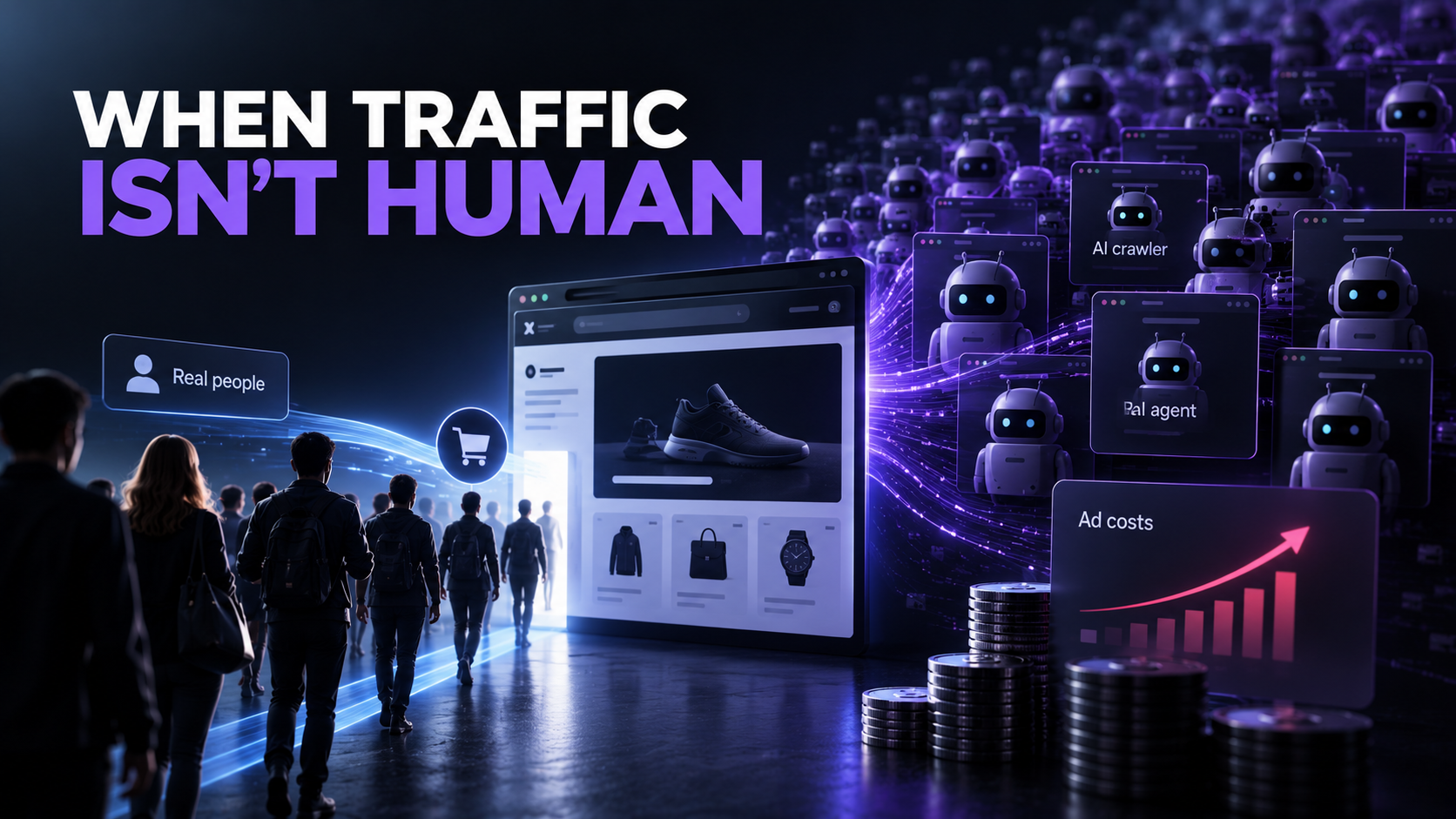
More than half of web requests are now coming from bots and AI agents. For digital marketers, that is starting to create a problem that goes well beyond inflated analytics.
New reporting published by PPC Land on September 8, citing Digiday research and Cloudflare data, shows automated traffic has passed 50% of web requests. GoFish says some clients have seen bot traffic increase 80% year over year, while changes made to compensate for that traffic pushed retargeting CPMs up by an average of 20%.
The problem is simple: much of digital advertising still assumes that website visitors are people.
A user visits a product page, gets added to a retargeting audience and can later be reached through paid media. But AI crawlers, shopping agents, search bots and other automated systems increasingly visit those same pages. If advertising and analytics platforms cannot reliably distinguish them from humans, the audience you are building may no longer represent the people you think it does.
For SMBs spending relatively small budgets, that matters. A polluted retargeting pool can make audiences larger while simultaneously making them less valuable. Filtering that traffic can reduce audience size and increase CPMs, while leaving it untouched can distort traffic, engagement and campaign performance data.
There is an important complication: not all AI traffic is bad traffic.
Some AI assistants are becoming valuable discovery channels. PPC Land cites mattress company Mellow Sleep reporting that visitors referred by AI assistants convert several times better than its site average, while UK retailer John Lewis has seen agentic searches grow from 0.3% to 2.5% of visits.
That creates a new measurement challenge for marketers. You want to exclude automated crawlers that pollute analytics and advertising audiences without accidentally filtering genuine customers arriving through ChatGPT, Gemini, Perplexity or shopping agents.
For SMBs and agencies, this makes first-party measurement increasingly important. Review how bot traffic is handled in analytics, separate known AI referrals where possible, monitor unusual spikes in landing-page and ecommerce activity, and be careful about treating raw website traffic or retargeting audience growth as evidence that marketing is improving.
Server-side measurement and stronger first-party customer data also become more valuable when browser-level traffic becomes increasingly difficult to interpret.
There is a bigger shift happening underneath all of this.
For years, digital marketing assumed a website visit represented a reasonably good proxy for human attention. AI agents are breaking that assumption.
The next generation of marketing measurement will need to answer a much more basic question before calculating conversion rates, audiences or attribution:
Was there actually a person on the other side of that page view?