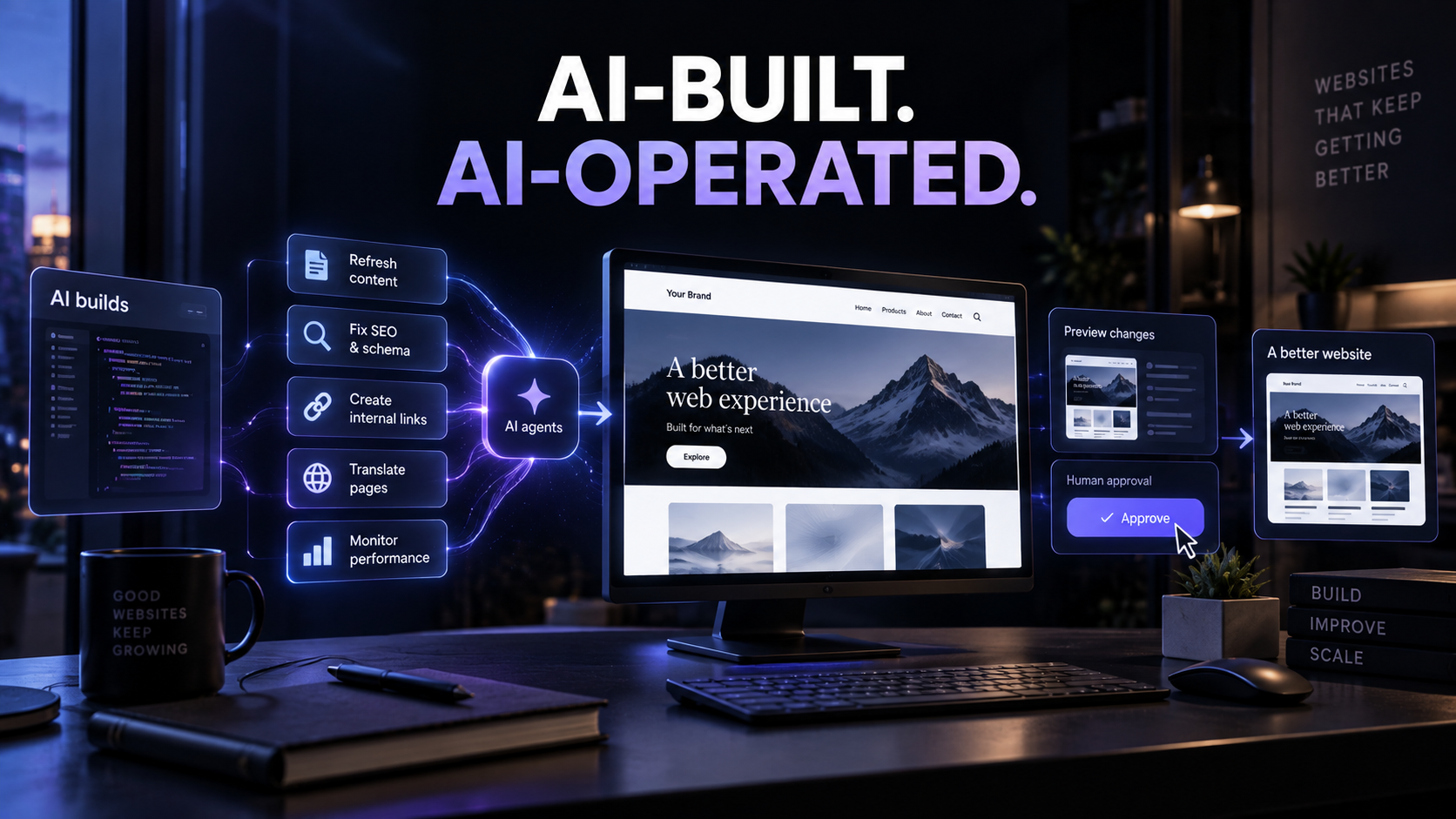
AI has become remarkably good at building websites. Tell Claude Code, Codex or Cursor what you want and you can have a functional site surprisingly quickly. But building the website was never the whole job.
After launch, someone still has to update content, fix technical SEO issues, create internal links, translate pages, refresh outdated articles and figure out why traffic isn’t growing. A new platform called Fimo wants AI agents to handle that part too.
Fimo was launched by the founders of Strapi and describes itself as an autonomous website platform. It works on top of code generated by tools such as Claude Code, Codex or Cursor and adds agents designed to continuously operate and improve the site.
From AI-built to AI-operated
The distinction is important. Most AI website tools solve “build me a website.” Fimo is trying to solve “keep making my website better.”
Its agents can refresh stale content, generate SEO pages, build internal links, fix schema issues, translate content and flag performance problems. Crucially, this doesn’t mean simply giving an AI unrestricted access to production. Agents can work in isolated environments and create branches and pull requests, with changes going through previews and human approval before publishing.
That’s a much more interesting architecture for businesses than simply letting an agent loose on WordPress.
Why this matters for SMBs
For a small company, launching a website usually isn’t the problem. Maintaining one consistently is. The SEO article that hasn’t been touched for two years, broken internal links, missing schema, untranslated pages and outdated service information gradually accumulate because nobody has time to deal with them.
Agents are unusually well suited to this kind of repetitive, continuous work. The opportunity isn’t necessarily to remove marketers or developers. It’s to let agents constantly find and prepare improvements while humans decide what actually goes live.
Fimo itself is new, so I wouldn’t hand a revenue-critical website over to it without testing it first. But the larger idea is compelling.
AI coding tools dramatically reduced the cost of creating software. The next wave will reduce the cost of operating and continuously improving it.
For SMB websites, that could ultimately be the bigger change.