Small businesses are full of software that doesn’t exist.
The customer onboarding tracker is an Excel sheet. Holiday requests arrive through email. Sales leads live partly in Outlook, partly in a spreadsheet and partly in someone’s head. The agency’s project profitability report requires copying numbers between three systems every Friday.
None of these problems is large enough to justify commissioning a €20,000 custom application. But together, they create a huge amount of repetitive work.
Microsoft wants Copilot to build those missing apps for you.
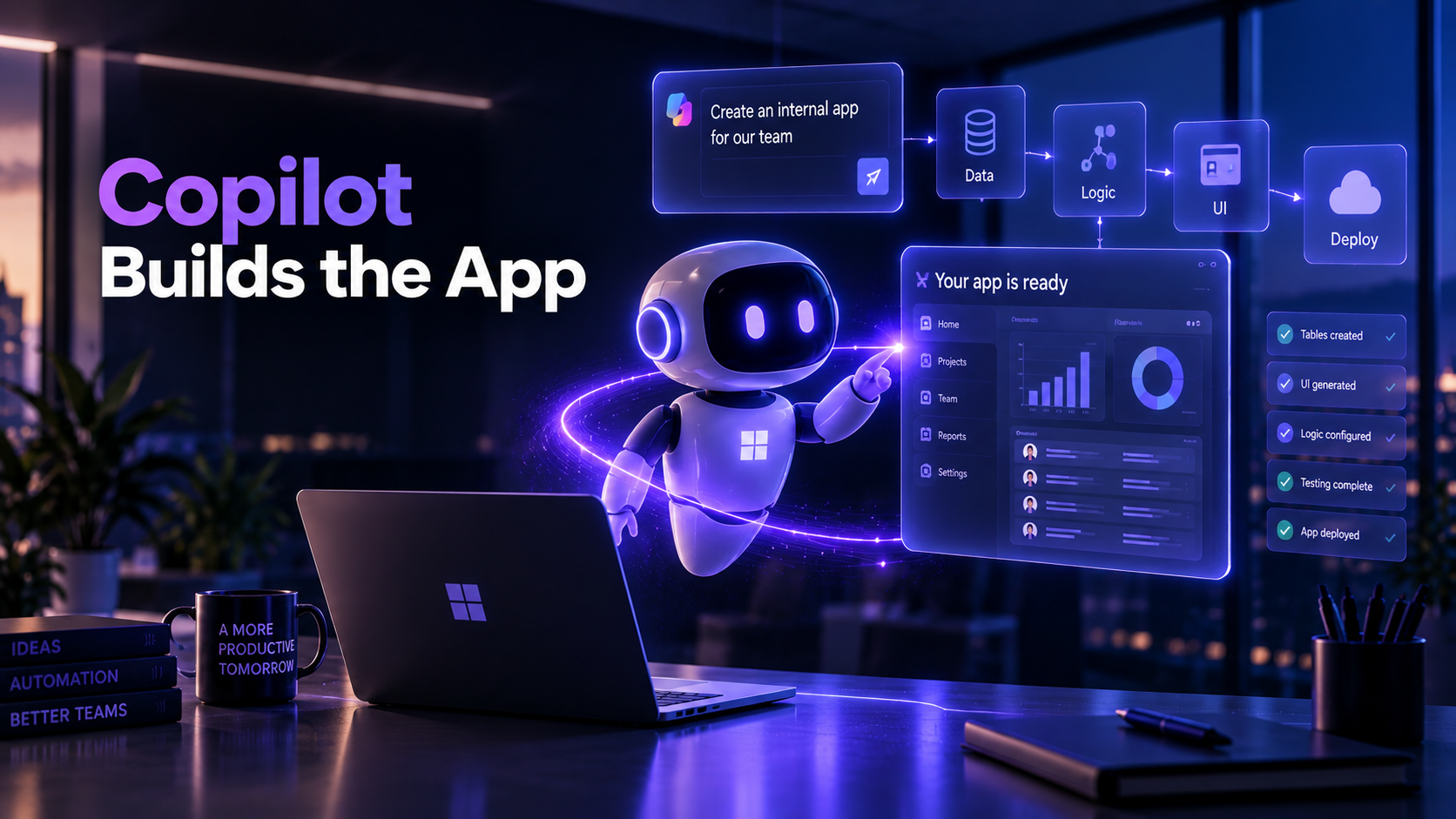
Microsoft has introduced full-stack business app creation inside Copilot Cowork and Copilot Studio. Instead of starting with a database, UI framework or development environment, you describe what the business needs in normal language. Copilot then creates the application, including its interface and data structure, and you can continue changing it conversationally.
A five-person sales company could ask for a simple lead tracker showing prospects, deal value, next action and owner. A marketing agency could build a campaign approval system where account managers submit creative, clients approve it and the team can see what is waiting for feedback. A small ecommerce company could create a returns dashboard showing the customer, product, reason, refund status and responsible employee.
Then you keep talking to it: “Add a dashboard showing overdue approvals.” “Only managers should see profit margins.” “Show today’s tasks first.” “Add a button for marking this customer as contacted.”
That is dramatically easier than traditional app development, and potentially easier than many no-code platforms because the business owner doesn’t first have to learn how the platform itself works.
The really interesting part is that these apps don’t have to be isolated prototypes. Microsoft says they can connect to business information through its existing connectors and Work IQ, allowing applications to use organizational context and write results back into systems inside the Microsoft 365 environment. The generated apps are full-stack applications built on open standards, with support for source control and deployment stages.
For an SMB already running on Microsoft 365, the possibilities are broad.
A recruitment company could build a candidate review app connected to documents and internal information. A consultancy could create a client onboarding portal that tracks documents, responsibilities and outstanding tasks. A service business could create an internal job tracker for incoming requests. An agency could build a content-production dashboard showing every article, designer, copywriter, approval status and deadline.
Even a simple “Who owes us what?” internal app could be valuable if it replaces a spreadsheet people constantly forget to update.
This is where AI app building could have an outsized impact on smaller companies. Large organizations already have development teams, Power Platform specialists and IT departments capable of building internal software. Small businesses usually don’t. They either adapt their processes around generic SaaS products or keep adding columns to spreadsheets.
AI changes the economics of that decision.
The question becomes less “Is this problem important enough to hire a developer?” and more “Could we describe the workflow clearly enough for Copilot to build a useful version?”
There are limitations. The newest app-building capability is still early. Microsoft’s /app skill is available through its Frontier program, while native app building in Copilot Studio is rolling into public preview. Microsoft also uses usage-based billing for building and running these apps, so businesses should watch costs once they move beyond experiments.
And generated software still needs testing. If an app handles payments, customer information, permissions or business-critical processes, “AI built it” is not a substitute for checking that it actually works.
But that shouldn’t distract from what is changing.
For decades, custom software was something small businesses bought only when the problem became expensive enough. No-code lowered that barrier, but someone still had to learn how to build the application.
Conversational app building lowers it again.
The next useful piece of software inside a 10-person business might not come from an app store, a development agency or a SaaS subscription.
It might start with someone typing: “I need a simple app that…”vvvvvvvvvvvvvvvvvvvvvvvvvvvvvvvvvvvvvvvvvvvvvvvvvvvvvvvvvvvvSmall businesses are full of software that doesn’t exist.
The customer onboarding tracker is an Excel sheet. Holiday requests arrive through email. Sales leads live partly in Outlook, partly in a spreadsheet and partly in someone’s head. The agency’s project profitability report requires copying numbers between three systems every Friday.
None of these problems is large enough to justify commissioning a €20,000 custom application. But together, they create a huge amount of repetitive work.
Microsoft wants Copilot to build those missing apps for you.
Microsoft has introduced full-stack business app creation inside Copilot Cowork and Copilot Studio. Instead of starting with a database, UI framework or development environment, you describe what the business needs in normal language. Copilot then creates the application, including its interface and data structure, and you can continue changing it conversationally.
A five-person sales company could ask for a simple lead tracker showing prospects, deal value, next action and owner. A marketing agency could build a campaign approval system where account managers submit creative, clients approve it and the team can see what is waiting for feedback. A small ecommerce company could create a returns dashboard showing the customer, product, reason, refund status and responsible employee.
Then you keep talking to it: “Add a dashboard showing overdue approvals.” “Only managers should see profit margins.” “Show today’s tasks first.” “Add a button for marking this customer as contacted.”
That is dramatically easier than traditional app development, and potentially easier than many no-code platforms because the business owner doesn’t first have to learn how the platform itself works.
The really interesting part is that these apps don’t have to be isolated prototypes. Microsoft says they can connect to business information through its existing connectors and Work IQ, allowing applications to use organizational context and write results back into systems inside the Microsoft 365 environment. The generated apps are full-stack applications built on open standards, with support for source control and deployment stages.
For an SMB already running on Microsoft 365, the possibilities are broad.
A recruitment company could build a candidate review app connected to documents and internal information. A consultancy could create a client onboarding portal that tracks documents, responsibilities and outstanding tasks. A service business could create an internal job tracker for incoming requests. An agency could build a content-production dashboard showing every article, designer, copywriter, approval status and deadline.
Even a simple “Who owes us what?” internal app could be valuable if it replaces a spreadsheet people constantly forget to update.
This is where AI app building could have an outsized impact on smaller companies. Large organizations already have development teams, Power Platform specialists and IT departments capable of building internal software. Small businesses usually don’t. They either adapt their processes around generic SaaS products or keep adding columns to spreadsheets.
AI changes the economics of that decision.
The question becomes less “Is this problem important enough to hire a developer?” and more “Could we describe the workflow clearly enough for Copilot to build a useful version?”
There are limitations. The newest app-building capability is still early. Microsoft’s /app skill is available through its Frontier program, while native app building in Copilot Studio is rolling into public preview. Microsoft also uses usage-based billing for building and running these apps, so businesses should watch costs once they move beyond experiments.
And generated software still needs testing. If an app handles payments, customer information, permissions or business-critical processes, “AI built it” is not a substitute for checking that it actually works.
But that shouldn’t distract from what is changing.
For decades, custom software was something small businesses bought only when the problem became expensive enough. No-code lowered that barrier, but someone still had to learn how to build the application.
Conversational app building lowers it again.
The next useful piece of software inside a 10-person business might not come from an app store, a development agency or a SaaS subscription.
It might start with someone typing: “I need a simple app that…”Small businesses are full of software that doesn’t exist.
The customer onboarding tracker is an Excel sheet. Holiday requests arrive through email. Sales leads live partly in Outlook, partly in a spreadsheet and partly in someone’s head. The agency’s project profitability report requires copying numbers between three systems every Friday.
None of these problems is large enough to justify commissioning a €20,000 custom application. But together, they create a huge amount of repetitive work.
Microsoft wants Copilot to build those missing apps for you.
Microsoft has introduced full-stack business app creation inside Copilot Cowork and Copilot Studio. Instead of starting with a database, UI framework or development environment, you describe what the business needs in normal language. Copilot then creates the application, including its interface and data structure, and you can continue changing it conversationally.
A five-person sales company could ask for a simple lead tracker showing prospects, deal value, next action and owner. A marketing agency could build a campaign approval system where account managers submit creative, clients approve it and the team can see what is waiting for feedback. A small ecommerce company could create a returns dashboard showing the customer, product, reason, refund status and responsible employee.
Then you keep talking to it: “Add a dashboard showing overdue approvals.” “Only managers should see profit margins.” “Show today’s tasks first.” “Add a button for marking this customer as contacted.”
That is dramatically easier than traditional app development, and potentially easier than many no-code platforms because the business owner doesn’t first have to learn how the platform itself works.
The really interesting part is that these apps don’t have to be isolated prototypes. Microsoft says they can connect to business information through its existing connectors and Work IQ, allowing applications to use organizational context and write results back into systems inside the Microsoft 365 environment. The generated apps are full-stack applications built on open standards, with support for source control and deployment stages.
For an SMB already running on Microsoft 365, the possibilities are broad.
A recruitment company could build a candidate review app connected to documents and internal information. A consultancy could create a client onboarding portal that tracks documents, responsibilities and outstanding tasks. A service business could create an internal job tracker for incoming requests. An agency could build a content-production dashboard showing every article, designer, copywriter, approval status and deadline.
Even a simple “Who owes us what?” internal app could be valuable if it replaces a spreadsheet people constantly forget to update.
This is where AI app building could have an outsized impact on smaller companies. Large organizations already have development teams, Power Platform specialists and IT departments capable of building internal software. Small businesses usually don’t. They either adapt their processes around generic SaaS products or keep adding columns to spreadsheets.
AI changes the economics of that decision.
The question becomes less “Is this problem important enough to hire a developer?” and more “Could we describe the workflow clearly enough for Copilot to build a useful version?”
There are limitations. The newest app-building capability is still early. Microsoft’s /app skill is available through its Frontier program, while native app building in Copilot Studio is rolling into public preview. Microsoft also uses usage-based billing for building and running these apps, so businesses should watch costs once they move beyond experiments.
And generated software still needs testing. If an app handles payments, customer information, permissions or business-critical processes, “AI built it” is not a substitute for checking that it actually works.
But that shouldn’t distract from what is changing.
For decades, custom software was something small businesses bought only when the problem became expensive enough. No-code lowered that barrier, but someone still had to learn how to build the application.
Conversational app building lowers it again.
The next useful piece of software inside a 10-person business might not come from an app store, a development agency or a SaaS subscription.
It might start with someone typing: “I need a simple app that…”